The Most Dangerous Phrase in Safety: ‘We’ve Always Done It This Way’
By Keina Jennings, CEO/CFP, SEA
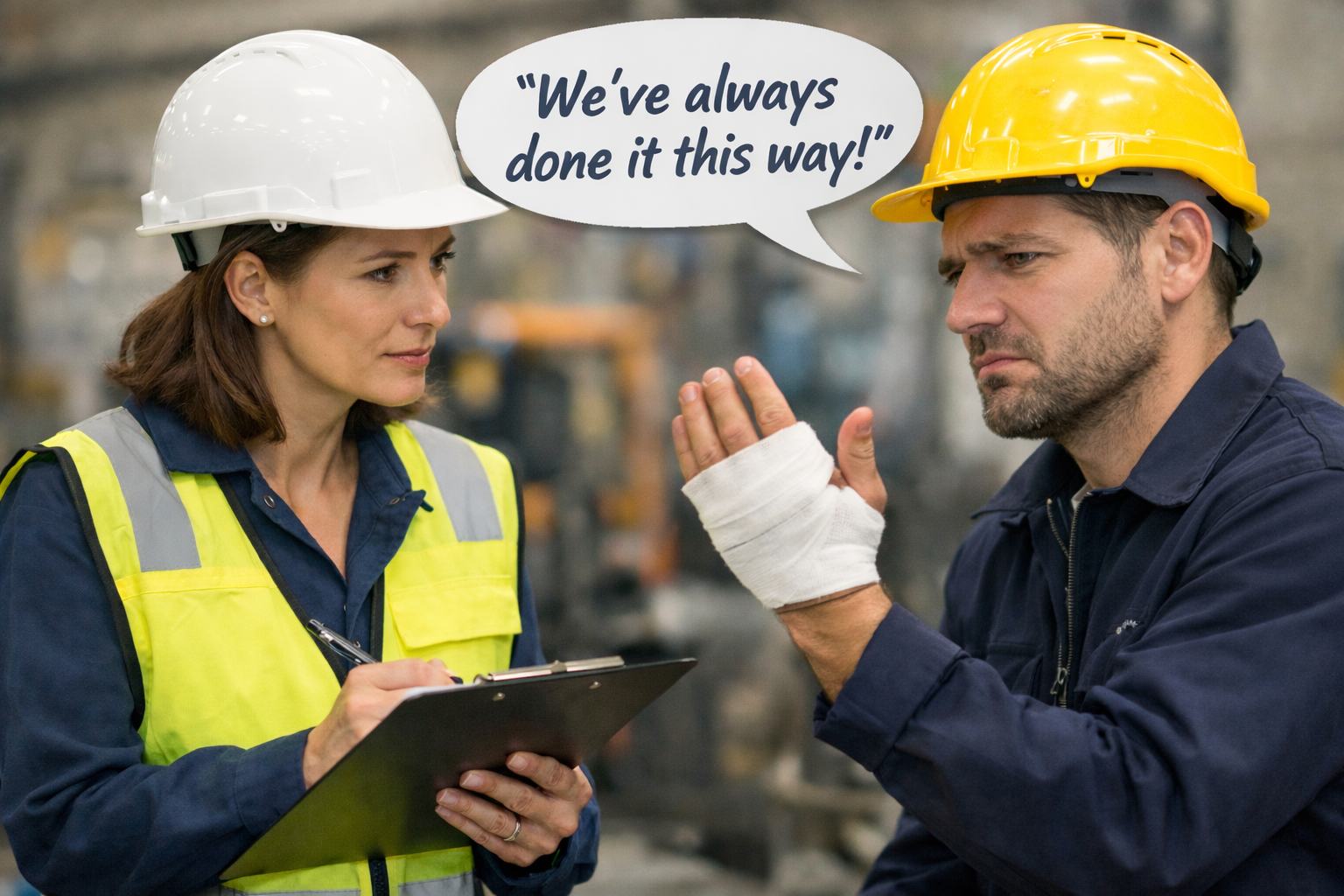
In safety and compliance conversations across manufacturing and industrial environments, one phrase continues to surface: “We’ve always done it this way.” While often said with confidence, this mindset can quietly introduce significant OSHA compliance risks and expose organizations to preventable incidents. It reflects a reliance on past success rather than current conditions, which is where many safety failures begin.
Familiarity can create a false sense of security. When a task has been performed the same way for years without incident, it becomes normalized—even if risk is present. Over time, employees and supervisors alike may stop questioning whether the process is still safe, especially when production pressures and efficiency goals take priority.
Understanding the Risk Behind Routine
During a recent workplace assessment, a facility had rearranged a machine on the production floor. Historically, employees used a bench as a crossover point to step over materials and access another part of the process. This practice had been in place for years without incident and was viewed as an efficient shortcut within the workflow.
However, after the machine was moved, the floor surface underneath the bench became uneven. The once-stable crossover point became unstable and began to wobble. Employees were now faced with a decision: continue using the unsafe bench or walk around the machine, which added time and disrupted productivity. Most chose the familiar path, despite the increased risk.
What seemed like a minor layout adjustment introduced a serious hazard. A fall from the bench could result in contact with nearby equipment, sharp edges, or moving parts—turning a routine task into a high-risk activity. This is how incidents often occur: not from entirely new processes, but from small, overlooked changes to existing ones.
Why Small Changes Create Big Problems
This scenario illustrates a critical safety principle: changes in environment can alter risk—even when the process itself remains the same. Equipment relocation, workflow adjustments, or even temporary fixes can unintentionally introduce hazards that were not previously present.
For example, a slight shift in machine placement can affect walking surfaces, create new pinch points, or limit access to emergency exits. Introducing new materials or tools can change exposure risks, while temporary workarounds often become permanent without proper evaluation. Each of these changes may seem minor in isolation, but collectively they can significantly impact workplace safety.
The OSHA Expectation
OSHA does not recognize “we’ve always done it this way” as a valid defense. Employers are expected to evaluate workplace conditions whenever changes occur. This includes identifying hazards, implementing appropriate controls, and ensuring employees are trained on any updated risks or procedures.
Failing to reassess conditions can lead to more than just injuries. It can result in citations, increased insurance costs, operational inefficiencies, and damage to organizational credibility. Compliance is not just about meeting standards—it is about maintaining awareness of how those standards apply as the workplace evolves.
Building a Proactive Safety Culture
To move beyond reactive safety management, organizations must embed change management into their safety processes. Every change—whether it involves equipment, layout, personnel, or materials—should trigger a review of potential risks.
Leaders should encourage employees to question existing practices and report concerns without hesitation. Simple questions can uncover hidden hazards: Is the work area still stable? Are employees taking shortcuts due to layout changes? Has the risk level increased even if the task looks the same? These conversations are essential to maintaining a safe environment.
While checklists and procedures are valuable tools, the goal is to build a culture where safety is continuously evaluated, not assumed. When employees understand that change equals risk, they become active participants in hazard identification and prevention.
Conclusion
The phrase “we’ve always done it this way” often signals a gap in hazard recognition. What worked yesterday may not be safe today. Even small, seemingly insignificant changes can create conditions that lead to injuries, operational disruptions, or compliance violations.
Organizations that take a proactive approach to evaluating change are better positioned to protect their workforce, maintain efficiency, and stay compliant with OSHA requirements. Safety should evolve alongside operations—not lag behind them.
How SEA Can Help
EA partners with organizations to identify hidden risks and strengthen safety performance before incidents occur. Our team provides comprehensive OSHA compliance gap analyses, detailed workplace safety assessments, and support in developing effective Management of Change (MOC) programs.
We also deliver customized training programs that help employees recognize hazards associated with change, along with ongoing consulting to ensure your safety systems remain aligned with regulatory expectations. By working with SEA, organizations gain a proactive partner focused on preventing issues before they impact people or production.