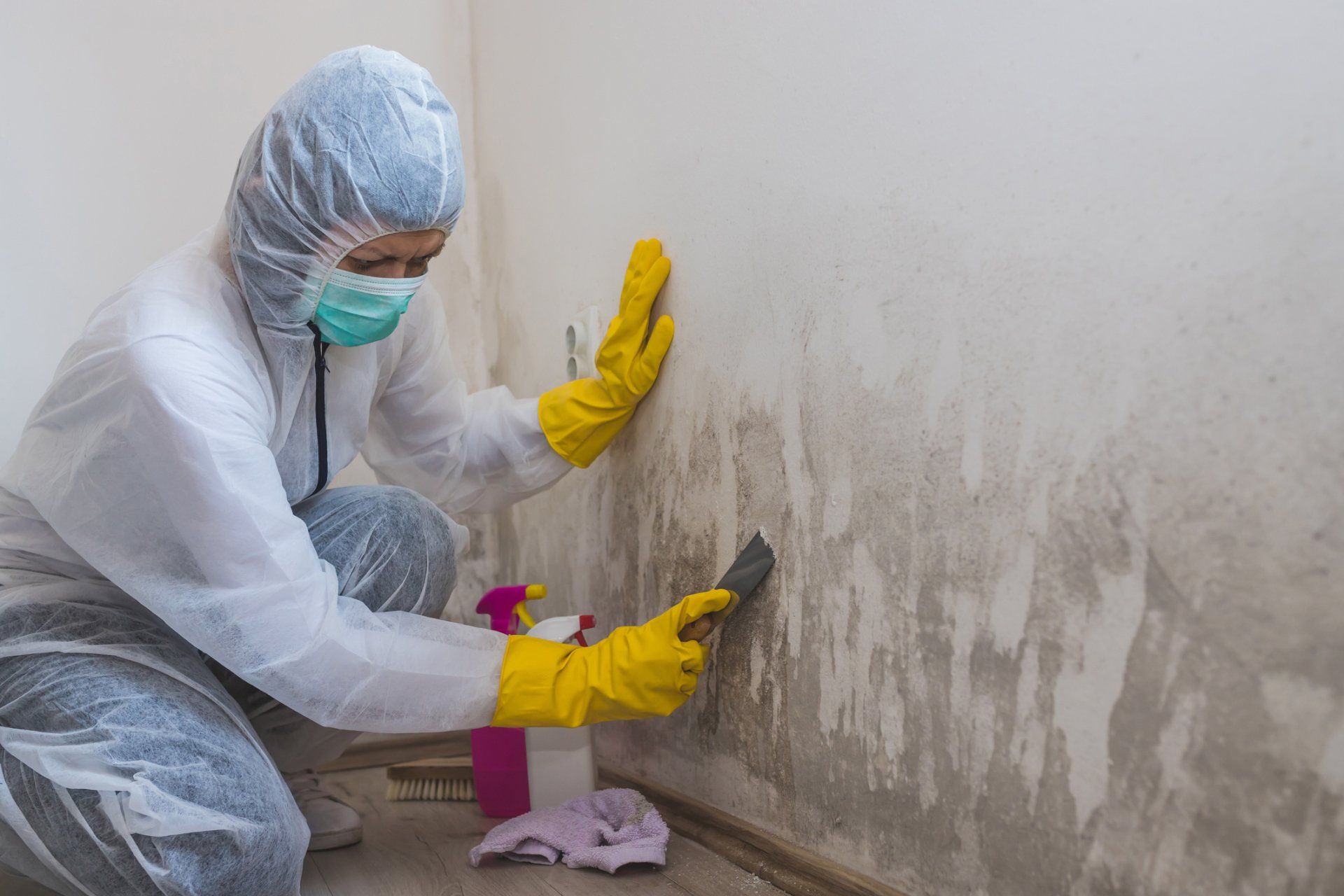
HOW TO GET RID OF MOLD

image representing how to get rid of mold
The presence of mold in a house or apartment is almost a certainty if the right conditions exist. The spores and the proteins and other elements in mold often cause negative reactions in respiratory systems in humans and their pets. Some forms of mold actually produce micotoxins that can cause illness, even death. Thus it is very important to identify if contamination exists in a residence, and if it is, how to get rid of mold.

It is possible, given the knowledge, tools and expertise, that an individual may remediate the mold themselves. However, since the health of a family unit is at stake, it is best to rely upon the services of a professional company that specializes in removing mold. In this manner you are assured that the vendor hired knows how to get rid of mold that has invaded the residence.

Only three conditions must exist before mold can attack a residence:

Moisture – this can be in the form of water infiltration, leaks or just condensation.
Nutrients – mold feeds on organic materials; the paper on wallboard, the paste in wall-coverings, cellulose in building materials, biological contamination and others.
Time – the time to grow and develop into a colony.

Mold spores are often spread through an HVAC (heating, ventilation and air-conditioning) system. Thus it is important that a program of removing mold include this system central to most modern residences.

The first step taken by a professional mold removal company is a mold inspection. This determines the location of the infestation and the extent of the spread. It will also tell the remediator how to get rid of mold, what steps he must take to make a home a healthy and safe environment again. Once the mold inspection is completed, the mold is attacked, killed and prepared for removal.

The mold removal is not the end of the process. The mold removal company will have a program to assure that the mold will not return. This will include using mold resistant coatings and paints, eliminating the conditions that allowed the mold to form in the first place and insuring that they will not return. To learn more, use the online contact form to contact SEA Inc.

By Keina Jennings March 12, 2026
A Quick Guide for Industrial and Manufacturing Facilities By Keina Jennings, CEO/CFO, SEA
By Don Harkness March 12, 2026
By Don Harkness, East Coast Regional Manager, SEA Ladder Inspection Safety At-A-Glance Ladders of all types are useful in the workplace. They are tools that allow workers to safely reach another level. Working at elevated levels poses plenty of risks, ones that have been covered in many regulatory training courses you have attended. Walking, Working Surfaces and Fall protection all focus heavily on the different hazards, of which SEA would be honored to share with you, but today, I want to focus on what needs to happen prior to using the ladder. The Right Tool for the Job And make no mistake, ladders are tools, and only perform as well as we, the operators, allow them to. So, what do we need to consider when picking the right ladder for our job? Several key factors include, but aren’t limited to: What are we doing? What style do you need? Step Ladders, extension ladders, and platform ladders all serve different purposes! What is the weight limit of my ladder? Note that the weight limit includes you and all the tools/equipment you are wearing, including fall protection! What height do I need my ladder to be? Ladders come in all shapes and sizes, so ensure you pick one that allows you to not put yourself at risk, even if it takes a little extra time to go and get it! What material should my ladder be made of? Most ladders are fiberglass but also come in several other materials. Make sure you plan for the task and don’t pick a metal ladder when working with electricity, for example The Most Important Step After choosing the ladder for our task, we need to perform an all-around inspection of the ladder. How often do we need to perform this inspection? Does it need to be documented? Ladders must be inspected before every use to ensure that no damage has occurred. As far as documentation goes, it is required that a documented inspection occur once a year, but your company policy can dictate more frequent documented inspections.
By Alison Jennings March 9, 2026
By Alison Jennings, VP Operations, SEA Sometimes it takes a real-life moment to remind us how quickly routine tasks can turn into injuries. Recently, I had a reminder of just how quickly something simple can turn into an injury. I was hanging a picture frame at home. Nothing complicated—just one of those quick projects you knock out in a few minutes. I picked the frame up by the sides to move it into position. As I lifted it, the bottom of the frame suddenly gave out. The glass dropped straight down and landed directly on the top of my bare foot. Within seconds, what started as a simple task turned into a trip to urgent care. The cut was deep enough that I ended up needing eight stitches. Looking back, there were a few things I didn’t think about in that moment. I was barefoot. I didn’t consider the possibility that the frame might break. I didn’t think about what could happen if the glass slipped or fell. It really wasn’t a dangerous job. I wasn’t using power tools or heavy equipment. I was just hanging a picture. But that’s the reality of many injuries—they don’t happen during obviously dangerous activities. They happen during everyday tasks when we assume nothing will go wrong.
Show More